Airing Out a House You Are Trying to Keep Warm

Every damp guide tells you to ventilate. Every energy bill tells you not to. In January those two instructions are in open conflict, and the usual result is that people quietly stop doing the first one.
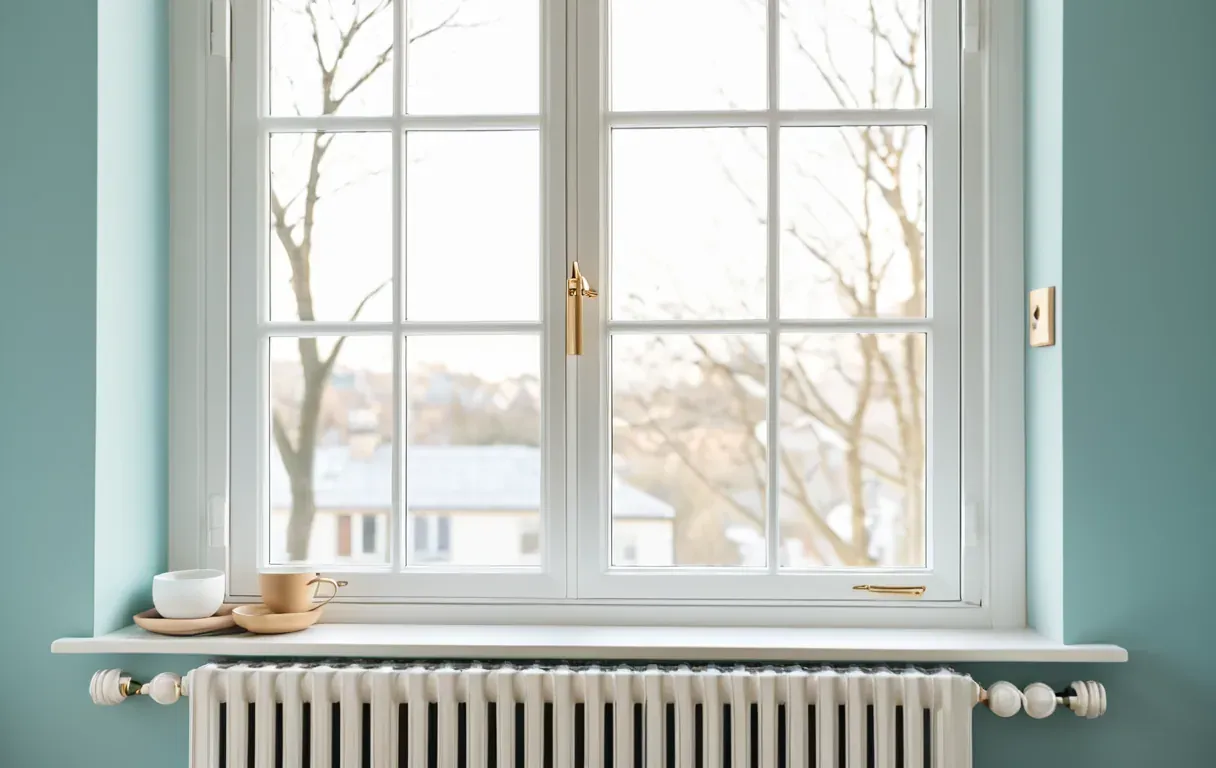
The way out is to stop thinking of ventilation as leaving a window open all day.
Your heating system is probably not ventilating anything
This surprises people. EPA puts it plainly: most home heating and cooling systems, including forced-air heating, do not mechanically bring fresh air into the house. They move the air that is already inside around and warm it up (EPA, Improving Indoor Air Quality).
So a house that feels warm and well-circulated can still be a house where the same air, and the same moisture, has been going round since October.
Short and wide beats long and narrow
Opening one window a crack for eight hours cools the walls without moving much air. Opening two windows on opposite sides of the home for five to ten minutes swaps the air out and barely touches the fabric of the building, which is what actually holds the heat. Do it after the moments that add water — after showering, after cooking, after the washing goes out.
EPA's list of what raises the outdoor ventilation rate is unglamorous and correct: opening windows and doors, running window or attic fans when the weather permits, and running local bathroom or kitchen fans that exhaust outdoors.
The fans you already have
An extractor that vents outside is the cheapest ventilation in the house and the most likely to be switched off because it is noisy. Run it during and after, not instead of. If you are not sure it is moving air, hold a square of tissue to the grille — it should hold there on its own.
Trickle vents in window frames are the other thing people close and forget. They exist to keep a slow exchange going when everything else is shut.
What this does not solve
Ventilation dilutes moisture; it does not remove a source. EPA is explicit that for most indoor air quality problems in the home, source control is the most effective solution — so if water is coming in rather than condensing out, airing the room is housekeeping, not a repair.
Read the sources
- EPA — Improving Indoor Air Quality — reproduced here; original at https://www.epa.gov/indoor-air-quality-iaq/improving-indoor-air-quality
- EPA — Ten Things You Should Know about Mold — reproduced here; original at https://www.epa.gov/mold/ten-things-you-should-know-about-mold
Looking for the right gear?
Browse the full toolkit by category.
Educational Disclaimer
This content is educational and does not constitute medical advice, diagnosis, or treatment. Mold-related illness is an area where the science is still developing — where a claim is contested, the article says so. Always work with a qualified clinician on health decisions, and with licensed professionals on remediation. Some links may be affiliate links; that never changes a recommendation.