Nine Renter Fixes That Need Nobody's Permission

Most mold advice assumes you own the place. Replace the extractor, re-grade the soil, open up the wall. If you rent, none of that is yours to do, and asking can take weeks you do not have.
So here is the other list: nine things that change how the rooms get used rather than how the building is built. No tools, no permission, nothing that touches your deposit.
The nine
- Run the bathroom fan during the shower and for a good while after. The steam does not leave when you do. If there is no fan, open the window and leave the door open once you are out.
- Move furniture a few inches off exterior walls. Air needs somewhere to go behind a wardrobe pushed flat against the coldest wall in the flat.
- Stop drying laundry on an indoor rack, or accept that you have to answer for the water it puts in the air. A full load has litres in it, and all of it ends up in the room.
- Put lids on pans. Boiling an uncovered pot is a humidifier you did not buy.
- Wipe window condensation in the morning instead of letting it sit on the frame and the sill.
- Leave closet doors ajar when the closet backs onto an exterior wall.
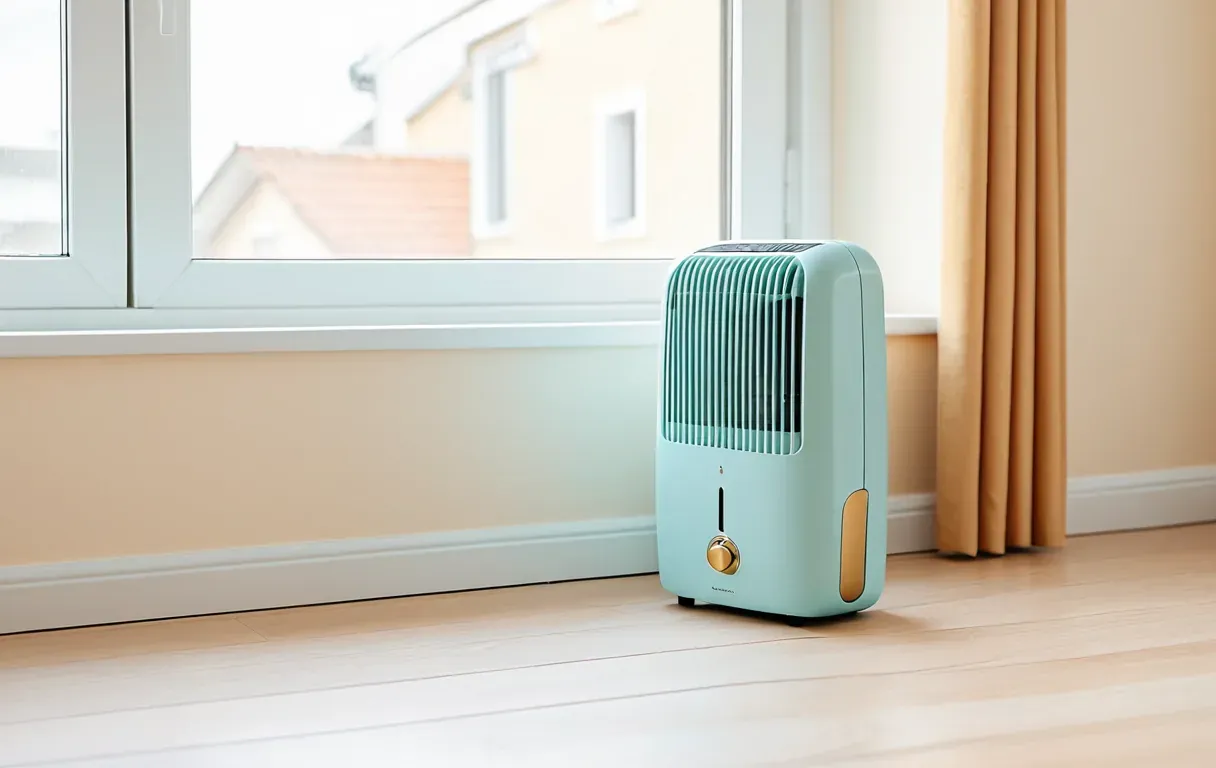
- Empty and dry the drip tray — dehumidifier, portable AC, whatever you have. A standing tray is a small permanent puddle.
- Vent the tumble dryer outside if it vents at all. EPA lists venting dryers and bathrooms to the outside among its basic moisture controls (Ten Things You Should Know about Mold).
- Dry anything that gets wet within 24 to 48 hours. That window is EPA's, and it is the single most useful number here: past it, damp materials start growing things (A Brief Guide to Mold, Moisture and Your Home).
What this list cannot do
None of this fixes a leak, a failed damp course, or a roof. If water is arriving from somewhere rather than condensing out of the air, you are not going to ventilate your way out of it, and the fix belongs to whoever owns the building.
EPA is blunt about the underlying point: there is no practical way to remove all mold and mold spores from indoor air, so the thing you are actually managing is moisture. That is why every item above is about water rather than about mold.
If you are already looking at growth rather than trying to prevent it, size decides who handles it. EPA puts the do-it-yourself line at roughly ten square feet — about a three-foot by three-foot patch — and past that recommends getting help. And do not paint over it: paint applied to a moldy surface is likely to peel.
Read the sources
- EPA — Ten Things You Should Know about Mold — reproduced here; original at https://www.epa.gov/mold/ten-things-you-should-know-about-mold
- EPA — A Brief Guide to Mold, Moisture and Your Home — reproduced here; original at https://www.epa.gov/mold/brief-guide-mold-moisture-and-your-home
Looking for the right gear?
Browse the full toolkit by category.
Educational Disclaimer
This content is educational and does not constitute medical advice, diagnosis, or treatment. Mold-related illness is an area where the science is still developing — where a claim is contested, the article says so. Always work with a qualified clinician on health decisions, and with licensed professionals on remediation. Some links may be affiliate links; that never changes a recommendation.