Other People's Damp: Hotels, Rentals, and Staying Away

A rental you are in for a weekend is not a building you can do anything about. The useful questions are different: is this room going to be unpleasant, can it be swapped, and what comes home with you.
The two-minute arrival check
- Smell the room before you open a window — after that you have lost the baseline.
- Look at the silicone in the bathroom and the underside of the window frames.
- Open the wardrobe and put your head in it. Closed storage on an exterior wall is the most reliable tell in the building.
- Look behind the headboard if it moves, and under the bed.
- Check whether the bathroom has an extractor and whether it runs at all.
If it is bad, ask early
Ask for a different room in the first hour rather than the last morning. Front desks reassign rooms all the time and almost never re-open a completed stay. Be specific and unemotional — a musty smell in the wardrobe is a concrete thing to report; "the room feels damp" is not.
For a holiday let, put it in writing through the platform rather than by text, which gives you a record and gives the host a reason to act.
Making a bad room less bad
You cannot ventilate a building you do not control, but you can run the bathroom extractor and open a window after showers, keep the bathroom door shut, and leave the wardrobe doors open rather than sealing damp air in with your clothes.
Do not unpack into a wardrobe that smells. Live out of the case.
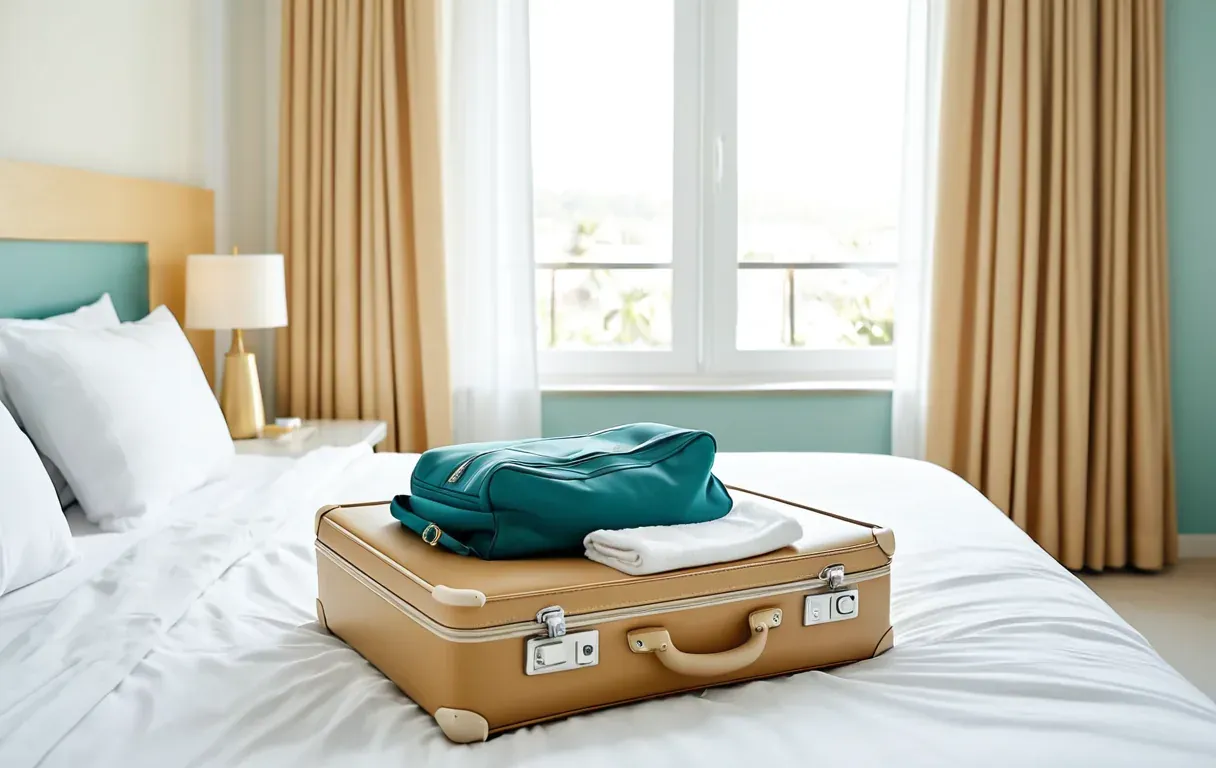
The suitcase is the part people forget
Clothes and a soft case absorb moisture and then travel home shut in a car boot for several hours. EPA's window for damp materials is 24 to 48 hours before growth becomes likely (A Brief Guide to Mold, Moisture and Your Home) — a wet swimsuit in a zipped case is comfortably inside it.
- Air anything damp before it goes in the case, even briefly.
- Bag wet items separately rather than letting them share with dry clothes.
- Unpack the same day you get back, and open the empty case rather than putting it straight into a cupboard.
Read the source
- EPA — A Brief Guide to Mold, Moisture and Your Home — reproduced here; original at https://www.epa.gov/mold/brief-guide-mold-moisture-and-your-home
Looking for the right gear?
Browse the full toolkit by category.
Educational Disclaimer
This content is educational and does not constitute medical advice, diagnosis, or treatment. Mold-related illness is an area where the science is still developing — where a claim is contested, the article says so. Always work with a qualified clinician on health decisions, and with licensed professionals on remediation. Some links may be affiliate links; that never changes a recommendation.